
<span class="vcard">mary</span>
mary
Featured

Bird Recovery Project

The bird population in Canada is in grave danger. Approximately 50 of Canada’s bird species are either Threatened or Endangered, based on the country’s Species at Risk Public Registry. Aerial insectivores, grassland birds, and shorebirds are among the identified species that have undergone a major decline in numbers.

Birds are forced to either leave their nesting places due to the emerging pressure from beach tourism or move to a different site to avoid natural predators. Another key contributing factor to the unstoppable decline of the bird populace in the country is climate change. Food becomes rare to find because of the sudden alterations in the environment, leading them to starvation and, ultimately, demise.

Thankfully, a handful of wildlife conservation specialists have partnered with us to combat this alarming bird population decline. Our bird recovery project has been made possible through this collaboration, whether it’s the creation of preservation breeding initiatives, development of cutting-edge reintroduction procedures, or advancement of tools to ascertain bird migration routes, we will do whatever we can to save the remaining at-risk bird species across the country.

Featured

Amphibian-Reptile Conservation

The amphibian and reptilian class of wildlife in Canada are among those frequently cited creatures that face the danger of becoming extinct.

Raccoons and some of their predators feed on their eggs, negatively impacting the biome. On top of that, unethical human activities such as poaching have greatly reduced their populace. Even climate change now poses a concerning threat to them. Additionally, commercial and industrial development has fragmented these species’ territory, leaving them prone to inbreeding.

To date, about 40 species of amphibian and reptile are classified as “Threatened” based on the latest report of COSEWIC or the Committee on the Status of Endangered Wildlife in Canada. Therefore, an estimated portion of them requires the urgent practical need to survive.

To mitigate their risk of being extirpated, we have formed a campaign that concentrates on preserving and reestablishing the lives of amphibians and reptiles. The key components of this project are preservation breeding, conservation head-starting, on-site intervention, reintroduction, and translocation.

Moreover, we have created partnerships with several research groups to formulate the best approaches to conserving such species. We welcome volunteers to report any sightings of such species in specific locations. Lastly, we conduct educational workshops focusing on road safety, especially in places where roadkill and similar accidents involving these species are often reported.

Domestic Pollination Program

Our domestic pollination project focuses solely on the reproduction of flowering plants. Once the plants have propagated successfully, they, in turn, will be capable of supporting even thousands of additional species.
Roughly 90 percent of all flowers cannot reproduce unless such habitat is populated with domestic pollinators. These hardworking propagators are mainly comprised of various bees and butterflies.
In Canada alone, a lot of bee and butterfly species and a few flowers are currently at risk of extirpation, …

Mammals

Northern Myotis
The “Myotis septentrionalis” or more popularly the northern long-eared bat has been observed as an endangered species throughout the country. The International Union for Conservation of Nature (IUCN) has categorized this bat species as Near Threatened.
As examined with other such mammals in the Myotis genus, northern long-eared bats are characterized by their long ears. They are usually spotted east of British Columbia in Southern Canada.

Insects

Rusty Patched Bumble Bee
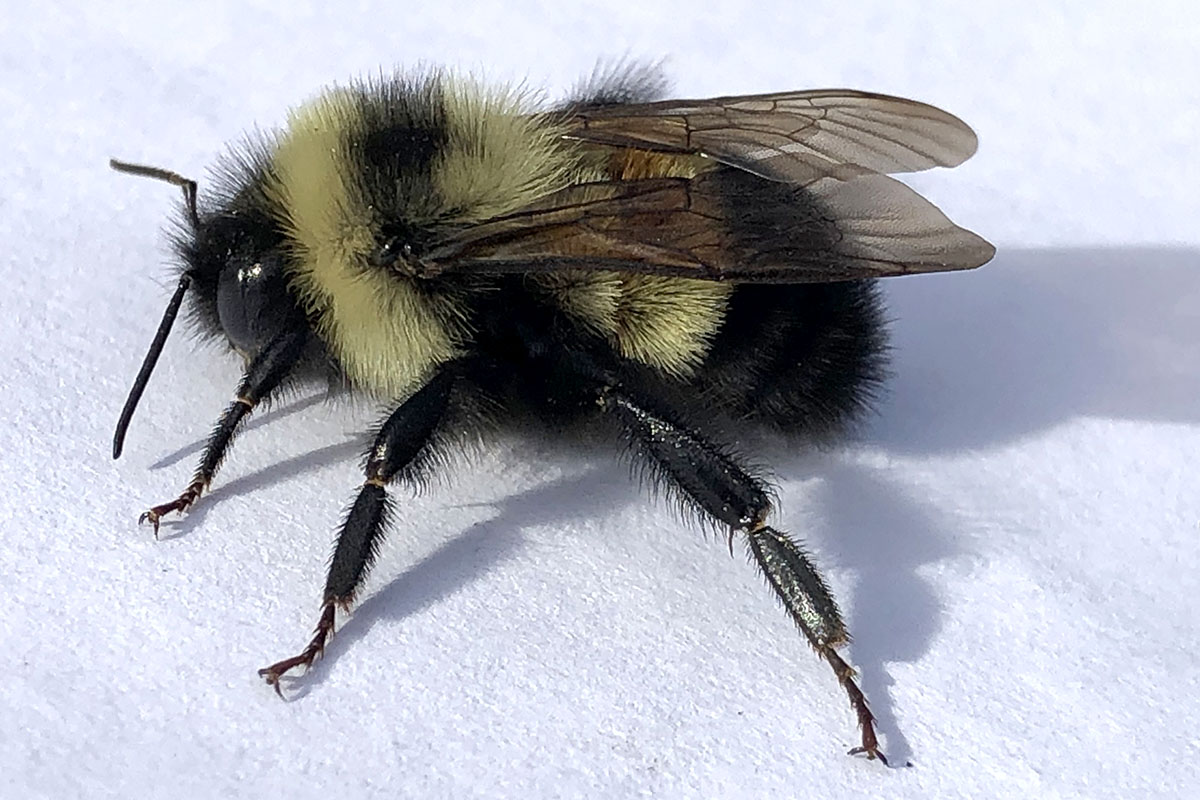
The “Bombus affinis,” more typically known as the rusty patched bumble bee, is an earnest pollinator native to North America. The rustic patch that is visible on the males’ abdomens is the story behind its name.
The rusty patched bumble bee typically builds its nest underground, seen mostly in former rodent burrows. However, this species is now on the verge of extinction and tagged as critically endangered on a global scale.

Birds

Burrowing Owl
A long-legged and short-tailed bird common in North America, the burrowing owl (Athene cunicularia) is one of the tiniest owls of its kind. This creature achieved such a name from its nesting routine, which is mostly done in burrows that badgers and squirrels dug.
Recently, there are only lesser than 1,000 pairs of burrowing owls reported to exist in Canada, making them one of the most critically endangered creatures.
Piping Plover

Amphibians & Reptiles

Oregon Spotted Frog
Oregon spotted frog (scientifically named “Rana pretiosa”) is a medium-sized aquatic animal that rarely strays away from water. This amphibious creature is known for being a great swimmer, an attribute related to the cleverly designed webbing on its feet extending to the tip of its toes.
The term “Preciosa” as its scientific name implies means “precious.” With only a few of them remaining, Oregon spotted frogs are among the most endangered species in Canada….