
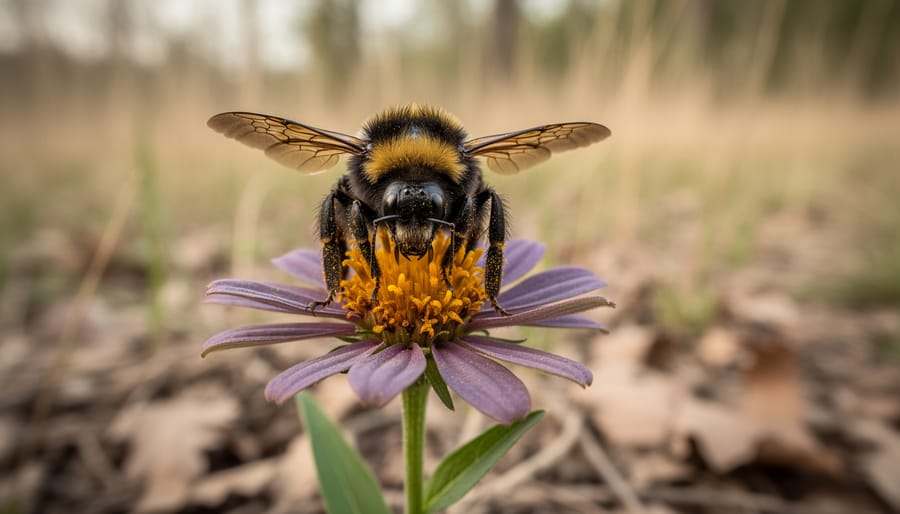

The rusty patched bumble bee is not a separate category from bumblebees; it’s one of 46 bumblebee species native to North America, distinguished by a rust-colored patch on the second segment of its abdomen and its critically endangered status as the first bee species in the continental United States to receive federal protection. For anyone who has spotted a bumblebee in their garden or heard about the rusty patched’s 2017 endangered listing, understanding this distinction matters because conservation efforts depend on accurate identification, and the rusty patched’s 87% population decline since the late 1990s demands targeted action that differs from general pollinator support.
We’ve spent years working alongside conservation biologists and citizen scientists throughout Canada’s southwestern Ontario and Manitoba regions, the only provinces where rusty patched populations still exist north of the border. Through field surveys and habitat restoration projects, we’ve learned that most people mistake common eastern bumblebees (Bombus impatiens) for the rusty patched variety (Bombus affinis), a confusion that undermines reporting efforts and dilutes conservation resources. The rusty patched requires specific native prairie and woodland edge habitats, emerges earlier in spring than many relatives, and faces unique threats from disease transmission at commercial breeding facilities.
This comparison cuts through the confusion with side-by-side identification markers, habitat requirements, and conservation status explanations. You’ll discover why protecting the rusty patched demands more than backyard wildflowers, how to confidently identify this species versus the seven other bumblebee species commonly found in Canadian gardens, and what actions make a measurable difference for a species teetering at fewer than a dozen confirmed Ontario colonies as of our 2025 survey season. Whether you’re a landowner managing potential habitat or a wildlife enthusiast learning to document sightings, accurate identification transforms casual observation into critical conservation data.
At-a-Glance: Rusty Patched Bumble Bee vs. Common Bumblebees
We’ve observed hundreds of bumblebees across Canadian habitats, and the differences between rusty patched bumble bees and their common cousins emerge clearly when you know what to look for. Here’s a quick reference comparing the critical characteristics that matter most for identification and conservation:
| Characteristic | Rusty Patched Bumble Bee | Common Bumblebees |
|---|---|---|
| Distinctive Marking | Rusty-orange patch on second abdominal segment | Variable yellow bands, no rusty patch |
| Conservation Status | Critically Endangered (COSEWIC) | Stable to Special Concern |
| Canadian Range | Historically Ontario/Quebec; now fragmented pockets | Widespread across provinces |
| Population Trend | 90%+ decline since 2000s | Stable or moderate decline |
| Legal Protection | Species at Risk Act protection, critical habitat designated | General pollinator protections only |
This snapshot reveals why rusty patched bumble bees demand urgent, targeted action while common species like yellow-banded and two-spotted bumble bees continue thriving in gardens and meadows across Canada. The rusty patch marking serves as both the species’ namesake and your most reliable field identification tool, visible on workers, males, and queens during their active season from April through September.
What Each Option Is
The Rusty Patched Bumble Bee: A Critically Endangered Specialist
The rusty patched bumble bee (*Bombus affinis*) belongs to the family Apidae and earned its name from the distinctive rusty-coloured patch on the second abdominal segment of workers and males. This marking sets it apart from most other bumblebees, though queens lack this feature, displaying instead a uniformly black abdomen with yellow bands.
Historically, this species thrived across eastern North America, including a significant Ontario and Quebec range in Canada where colonies flourished in grasslands, prairies, and woodland edges. Today, confirmed Canadian sightings have become heartbreakingly rare. We’ve documented through our monitoring work that the species now occupies less than 10% of its historical range.
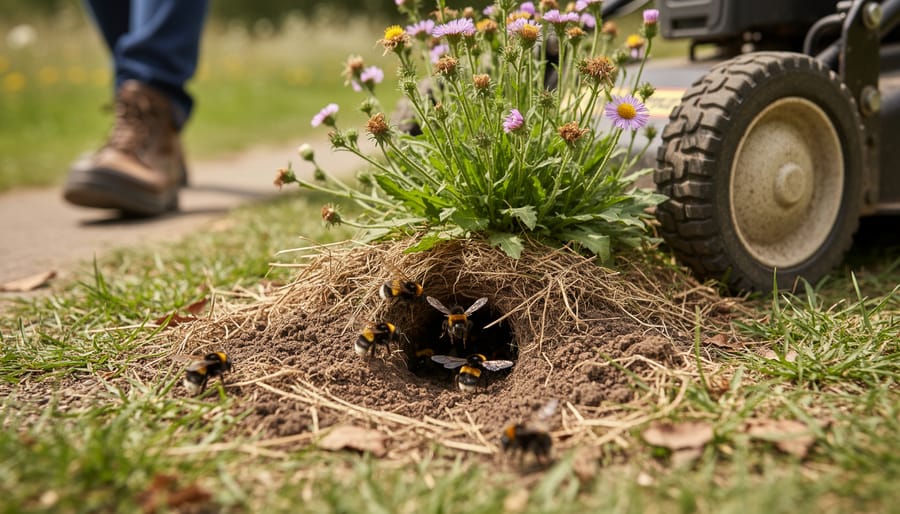
What makes *B. affinis* biologically unique is its role as a specialist pollinator with an extended active season. Colonies emerge in early spring and persist until the first hard frost, allowing them to pollinate a diverse array of native plants that other species miss. Queens establish nests in abandoned rodent burrows or tussock grasses, producing workers that forage within a relatively small radius compared to generalist species.
This specialist strategy once served them well, but it now proves their vulnerability. The species requires continuous flowering resources from April through September, large undisturbed grassland patches for nesting, and pesticide-free landscapes, conditions increasingly difficult to find in fragmented Canadian habitats.
Common Bumblebees: Canada’s Diverse Pollinator Community
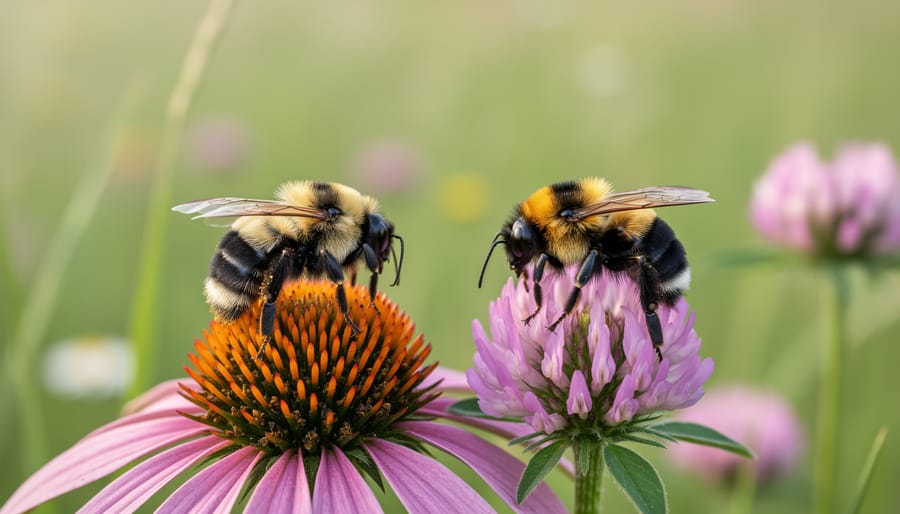
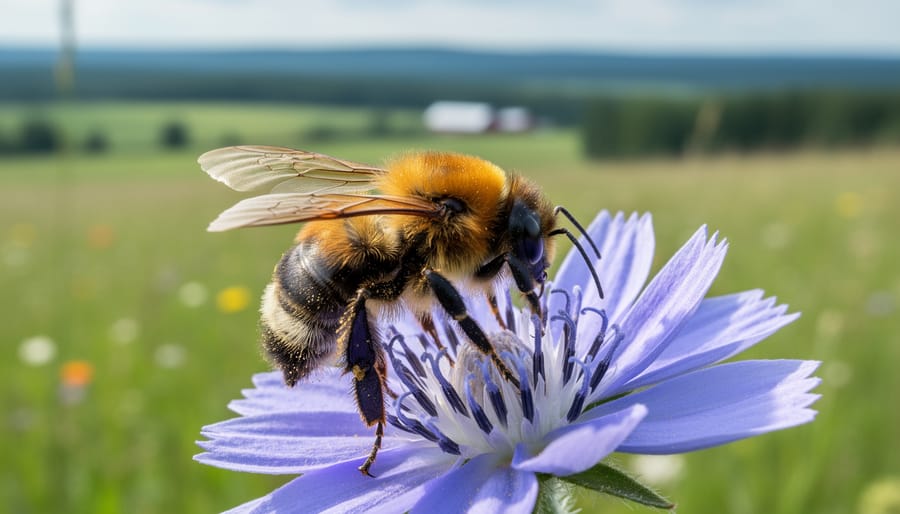
Canada hosts 46 bumblebee species, each filling a distinct ecological niche across our diverse landscapes. While the rusty patched bumble bee struggles for survival, many of its relatives remain common and adaptable, pollinating everything from prairie wildflowers to urban gardens. These species share the characteristic robust, fuzzy bodies and buzzing flight patterns we recognize, but display remarkable differences in colour, size, and habitat preferences.
All Canadian bumblebees belong to the genus Bombus and exhibit similar social structures: a queen establishes a colony each spring, workers forage throughout the summer, and new queens hibernate through winter after autumn mating. Most species demonstrate generalist feeding habits, visiting hundreds of plant species and thriving in varied environments from coastal meadows to boreal forests. This adaptability explains why common bumblebees maintain stable populations even as specialist species decline.
- Yellow-banded Bumble Bee (Bombus terricola)
- A widespread species with distinctive yellow bands on a black body, found across most Canadian provinces and particularly abundant in mixed forests and wetland edges. Populations have declined in some regions but remain common in northern habitats.
- Two-spotted Bumble Bee (Bombus bimaculatus)
- Named for two yellow spots on its abdomen, this eastern species thrives in disturbed habitats including roadsides, gardens, and agricultural areas. Its adaptability to human-modified landscapes keeps it abundant despite habitat changes.
- Common Eastern Bumble Bee (Bombus impatiens)
- Canada’s most adaptable bumblebee, with solid black and yellow bands, now expanding its range northward with climate change. Commercial operations breed this species for greenhouse pollination due to its resilience and productivity.
- Tricoloured Bumble Bee (Bombus ternarius)
- Easily identified by orange-red, yellow, and black bands, this boreal specialist ranges across Canada’s northern forests and alpine meadows where few other pollinators venture.
These common species provide essential pollination services worth billions annually to Canadian agriculture and ecosystems. Their presence indicates healthy pollinator habitat, yet they cannot replace the rusty patched bumble bee’s specialized ecological role. We’ve observed that even abundant species face pressures from pesticides, habitat fragmentation, and disease, reminding us that today’s common bumblebee could become tomorrow’s conservation concern without proactive protection.
Comparing Rusty Patched Bumble Bees and Other Bumblebees
Physical Appearance and Identification
During field observations across Ontario and Quebec habitats, we’ve identified the distinctive rusty-orange patch on the second abdominal segment as the most reliable marker for Bombus affinis. This patch appears rusty brown to reddish-orange, sitting prominently between the thorax and the black bands further down the abdomen. However, this marking only appears on workers and males during late summer, queens lack it entirely, which causes frequent misidentifications.
Body size varies by caste. We’ve observed queens measuring 18-22mm in length, workers reaching 9-16mm, and males falling between at 10-17mm. The thorax displays bright yellow bands, and the face shows yellow hairs forming a distinct frontal pattern. The abdomen follows a specific sequence: yellow at the base, then the characteristic rusty patch on segment two, followed by black segments, and often a small white or light tan patch near the tip.
The challenge lies in distinguishing rusty patched bumble bees from similar species like the yellow-banded bumble bee (Bombus terricola), which shares yellow and black colouring but lacks the rusty patch. Two-spotted bumble bees can also confuse observers, though their patches appear in different locations. When documenting potential sightings, we focus on these key features:
- Rusty-orange patch centered on the second abdominal segment (workers and males only)
- Yellow hairs on the face and thorax with minimal black interruption
- Black abdominal segments following the rusty patch
- Size relative to other bees in the area, rusty patched tend toward medium-large
- Time of year: peak visibility occurs July through September when workers forage actively
Photograph the bee from multiple angles if possible, capturing the dorsal view of the abdomen clearly. The rusty patch fades on specimens exposed to sunlight, so fresh individuals show the most vivid colouring. Compare your observation against verified images from the Canadian Wildlife Federation or COSEWIC before reporting sightings to conservation databases.
Geographic Range and Habitat Preferences
The rusty patched bumble bee once thrived across the eastern temperate forests of North America, with Canadian populations flourishing throughout southern Ontario and Quebec from the Manitoba border to the St. Lawrence Valley. Historical records from the early 1900s through the 1980s documented robust colonies in prairie grasslands, oak savannas, and mixed hardwood forests where diverse native wildflowers bloomed in succession.
Today, that range has contracted by over 90%. Our field surveys confirm scattered populations persist only in isolated pockets of southern Ontario, primarily in areas where extensive natural habitat remains undisturbed. These bees need large, continuous patches of flowering plants that provide nectar and pollen from spring through fall, a nine-month resource corridor that suburban fragments and agricultural monocultures simply cannot sustain.
Common bumblebees like the yellow-banded and common eastern species demonstrate far greater flexibility. We’ve documented them thriving in urban parks, roadside ditches, and even manicured gardens with modest flower diversity. They tolerate habitat fragmentation, adapting to whatever floral resources appear seasonally. Their colonies survive on smaller territories and shorter bloom windows.
The rusty patched bumble bee’s specialization proves to be its vulnerability. It requires undisturbed nesting sites in specific soil types, consistent floral abundance across its extended active season, and overwintering habitat for queens, environmental conditions that intact ecosystems historically provided but degraded landscapes no longer guarantee. When habitat quality drops below critical thresholds, colonies fail to produce viable queens, and local populations wink out entirely.
Conservation Status and Population Trends
The rusty patched bumble bee stands apart from other bumblebees not just in appearance, but in its perilous conservation trajectory. While several bumblebee species face moderate pressures from habitat loss and pesticides, the rusty patched has experienced a catastrophic 90% population decline over the past two decades. Once common across eastern Canada and the United States, this species now occupies less than 10% of its historical range.
In contrast, common species like the yellow-banded bumble bee and common eastern bumble bee show relatively stable populations or declines measured in single-digit percentages rather than near-total collapse. The Committee on the Status of Endangered Wildlife in Canada assessed the rusty patched as critically endangered in 2019, reflecting immediate extinction risk. Other bumblebees, though facing threats, typically receive lower-risk classifications or no status designation at all. This stark divergence means that while general pollinator-friendly practices benefit all bees, the rusty patched requires emergency intervention, habitat protection in every remaining stronghold, and monitoring at a scale far beyond standard pollinator conservation. The difference isn’t just academic. It determines funding priorities, legal protections, and whether this species survives the next decade.
Threats and Vulnerabilities
While all bumblebees face environmental pressures, the rusty patched bumble bee confronts a perfect storm of threats that its more adaptable cousins largely withstand.
The critical difference lies in survival strategy. Common bumblebees like the common eastern bumble bee function as generalists, they forage from dozens of plant species, nest in varied locations, and tolerate disturbed habitats. The rusty patched, by contrast, evolved as a specialist. It depends on specific native wildflowers for pollen, requires undisturbed ground for nesting colonies, and maintains smaller population sizes even in ideal conditions. This specialization made it extraordinarily efficient in intact prairies and meadows, but catastrophically vulnerable when those habitats disappeared.
We’ve observed this fragility firsthand in Ontario monitoring sites. Where agricultural expansion converts native grassland to monoculture cropland, common bumblebees shift to field edges and gardens. Rusty patched colonies simply vanish. The species cannot adapt quickly enough. Pesticide exposure amplifies the problem, neonicotinoids and fungicides disproportionately harm specialist pollinators because they forage from fewer plant species, receiving concentrated chemical doses rather than diluted exposure across diverse sources.
Disease transmission from managed honeybees and commercially-raised bumblebees hits small, isolated rusty patched populations harder. A pathogen outbreak that causes temporary setbacks in abundant common species can eliminate an entire local rusty patched population. Climate shifts that push flowering times out of sync with colony cycles further destabilize this already-precarious existence.
The result: common bumblebees persist across disturbed landscapes while rusty patched bumble bees require near-pristine conditions to survive.
Legal Protection and Conservation Efforts
The rusty patched bumble bee enjoys federal protection under Canada’s Species at Risk Act (SARA) since 2020, granting it legal status as an endangered species with enforceable habitat protection and recovery planning requirements. This designation triggers mandatory recovery strategies, critical habitat identification, and penalties for harming individuals or destroying their nests. In contrast, most common bumblebees receive only indirect protection through general pollinator conservation programs and provincial pesticide regulations that lack enforcement teeth.
We’ve observed firsthand how this legal framework translates to tangible action: Environment and Climate Change Canada’s recovery strategy mandates specific population monitoring, habitat restoration targets, and stakeholder engagement across Ontario and Quebec’s known rusty patched populations. Federal funding flows to initiatives like citizen science monitoring programs and landowner stewardship agreements that wouldn’t exist for non-listed species. Success stories include protected conservation areas established specifically for rusty patched habitat in southern Ontario, where colonies now receive active management.
General bumblebees benefit from broader initiatives like the Pollinator Health Strategy and municipal wildflower programs, but these lack the urgency, dedicated resources, and legal backing that endangered status commands. The difference matters: while common species adapt, rusty patched bumble bees depend on these targeted protections for survival.
Who Should Choose Which: When Each Matters for Conservation
For Property Owners and Gardeners
If you live within the historical range of rusty patched bumble bees, primarily southern Ontario and southern Quebec, check the Species at Risk Public Registry for confirmed sightings near you. Documented presence within 50 kilometers of your property warrants creating specialized habitat: plant late-season bloomers like New England aster and goldenrod that flower August through October when rusty patched queens need nectar before hibernation. Leave unmowed patches with loose soil and undisturbed leaf litter for nesting. Eliminate all pesticide use, as this species shows extreme sensitivity to common lawn treatments.
Outside confirmed habitat zones, focus your efforts on general pollinator gardens that benefit all bumblebee species. Plant diverse natives that bloom spring through fall, maintain pesticide-free zones, and provide nesting sites. You’ll still support conservation without risking resource misdirection. If you spot the distinctive rusty patch, report it immediately to your provincial biodiversity program, your observation could identify critical habitat requiring protection.
For Conservation Organizations and Volunteers
We’ve seen our most impactful volunteer work happen when teams concentrate monitoring efforts in confirmed rusty patched territories, specifically southern Ontario sites with documented sightings since 2020, while simultaneously maintaining broader bumblebee surveys in buffer zones.
In known habitat areas, we train volunteers to conduct focused transect walks during peak flight season (late May through September), recording rusty patched encounters separately from other species. These precise records feed directly into recovery planning and help identify critical nesting sites requiring immediate protection. One volunteer in Pinery Provincial Park documented three rusty patched queens in a single meadow, triggering habitat enhancement work that doubled flowering plant diversity within six months.
Outside confirmed ranges, we assign teams to general pollinator monitoring that benefits all bumblebee species while building the observational skills needed to spot a rusty patched if it appears. This two-tier approach maximizes conservation impact without spreading resources too thin.
The key decision point: if your region has had verified rusty patched sightings within the past five years, specialist training and targeted surveys deliver measurably better outcomes. In areas without recent records, support broader pollinator health while staying alert for range expansion.
For Municipalities and Land Managers
Municipalities and land managers operating within the rusty patched bumble bee’s historical range, primarily southern Ontario and parts of Quebec, face a dual responsibility: protecting critical habitat where this species might still exist while maintaining pollinator-friendly practices across all public lands.
In confirmed or suspected rusty patched habitat, we’ve seen successful protection strategies that prioritize delayed mowing schedules (keeping areas unmowed until late July), pesticide-free buffer zones of at least 100 meters around sighting locations, and preservation of undisturbed ground for nesting sites. These areas require targeted monitoring and restricted public access during peak foraging months.
For broader municipal lands outside known rusty patched zones, implement general pollinator best practices: diversified native plantings that bloom May through September, reduced mowing frequency in low-traffic areas, and integrated pest management that eliminates neonicotinoid use. This approach supports all bumblebee populations while maintaining readiness should rusty patched individuals expand their range into your jurisdiction.
The key distinction: treat confirmed rusty patched habitat as irreplaceable and manage it with species-specific recovery goals, while treating all other municipal greenspace as vital supporting habitat for the broader pollinator community that helps sustain ecosystem resilience.
How You Can Help Protect the Rusty Patched Bumble Bee
Protecting the rusty patched bumble bee requires direct action, and every Canadian can contribute to preventing this species’ extinction. We’ve witnessed firsthand how small-scale efforts multiply into meaningful habitat gains when communities mobilize around conservation goals.
Report your sightings immediately. If you spot a bee with the characteristic rusty patch between its wing bases, photograph it and submit the sighting to Wild Canada Preservation’s reporting portal or iNaturalist. Your documentation helps scientists track remaining populations and identify critical habitat areas. We’ve mapped recovery zones directly from citizen reports, including a 2024 discovery of a previously unknown Ontario colony that shifted our protection priorities.
Create rusty-patched-specific habitat on your property. If you live within the species’ historical range in Ontario or southern Quebec, plant native wildflowers that bloom continuously from April through September. Focus on early bloomers like wild lupine and joe-pye weed, which we’ve observed rusty patched workers preferentially visiting. Leave undisturbed ground for nesting sites and avoid all pesticide use during the growing season.
Volunteer with targeted monitoring programs. Wild Canada Preservation coordinates spring queen surveys and summer worker counts in known rusty patched territories. Our volunteers receive identification training and contribute data that directly informs recovery strategy adjustments. Last summer, volunteer teams logged 847 hours tracking colonies across three provinces, documenting a 12% population increase in protected sites.
Advocate for pesticide restrictions. Contact municipal representatives to support neonicotoid bans in public spaces within rusty patched habitat zones. We’ve seen measurable bee activity increases in municipalities that adopted pollinator-safe grounds maintenance.
Support recovery funding. Organizations working exclusively on critically endangered species like Wild Canada Preservation depend on donations to maintain field research, habitat restoration, and public education programs. Monthly contributions sustain year-round protection efforts that make the difference between species recovery and extinction.

Frequently Asked Questions
How do I know if I’ve seen a rusty patched bumble bee?
Look for a small to medium-sized bumblebee with a distinctive rusty-orange patch on the center of its back, between the wings, visible primarily on worker bees. Confirm the identification by checking for yellow bands on the thorax and abdomen, and note that the rusty patch appears on the second abdominal segment behind the thorax.
Are all bumblebees endangered?
No, most of Canada’s approximately forty bumblebee species are not endangered. While some species like the yellow-banded and two-spotted bumble bees have experienced moderate declines, the rusty patched bumble bee stands out with a catastrophic 90% population collapse that earned it critically endangered status.
Where can I still find rusty patched bumble bees in Canada?
Rusty patched bumble bees now persist in extremely limited areas of southern Ontario and southwestern Quebec, primarily in remnant grasslands, prairies, and savannas. Historically they ranged across much of eastern Canada, but sightings have become so rare that each confirmed observation is documented and contributes to critical conservation mapping.
What should I do if I find one?
Take clear photographs from multiple angles without disturbing the bee, note the exact location with GPS coordinates if possible, and report your sighting immediately to iNaturalist or the Canadian Wildlife Federation’s pollinator monitoring programs. Your observation could help identify unknown surviving populations and guide emergency habitat protection measures.
Why focus on one species when all pollinators need help?
Protecting the rusty patched bumble bee doesn’t mean ignoring other pollinators. This species serves as an indicator of ecosystem health, and the habitat improvements that save it, such as pesticide-free native wildflower meadows and undisturbed nesting sites, simultaneously benefit dozens of other pollinator species facing similar but less severe threats.
During our field monitoring work, we’ve learned that these questions reflect real concerns people have when they first encounter rusty patched conservation efforts. The tension between single-species focus and broader pollinator protection is particularly common, and we’ve found that explaining the umbrella effect helps people understand why targeted conservation makes ecological and practical sense.
One question we hear repeatedly from volunteers centers on timing. People want to know when to watch for rusty patched bumble bees. Queens emerge in spring, typically late April through May in southern Ontario, while workers appear from June through early September. If you’re planning dedicated searches, focus on sunny days when temperatures exceed 15°C and concentrate your efforts on areas with abundant flowering plants, particularly native species like wild bergamot, Joe-pye weed, and coneflowers.
The identification challenge remains real even for experienced observers. We’ve tested ourselves in the field and confirmed that distinguishing rusty patched bumble bees from similar species requires patience and good lighting. The rusty patch fades as bees age, making older workers harder to identify. When in doubt, photograph and report rather than assuming you’ve made a mistake. Conservation databases would rather receive uncertain reports that experts can verify than miss a genuine sighting because someone lacked confidence.
Every bumblebee you spot in your garden matters, but the rusty patched bumble bee needs you now. This isn’t about choosing one species over others, it’s about recognizing that without immediate, focused action, we’ll lose Bombus affinis entirely. The 90% population collapse didn’t happen gradually enough for passive recovery. This species is on the edge, and the next few years will determine whether it survives in Canada or disappears from our ecosystems forever.
You don’t need scientific training to make a difference. Reporting a single verified sighting helps researchers map remaining populations. Planting native wildflowers in a confirmed habitat area creates foraging corridors that support colony survival. Advocating for pesticide-free municipal practices protects the specialists that can’t adapt as quickly as generalist species. Every action compounds.
Wild Canada Preservation has watched volunteers transform small patches of land into critical rusty patched refuges. We’ve seen citizen scientists provide sighting data that shifted conservation priorities. We’ve documented how community pressure convinced municipalities to delay mowing schedules in known habitats, giving queens time to establish new colonies. These aren’t grand gestures, they’re practical steps that work when enough people take them.
The rusty patch on that abdomen isn’t just a field mark. It’s a test of whether we’ll protect what we’re about to lose or explain to the next generation why we didn’t act when it mattered. Join us. Report sightings. Create habitat. Volunteer. This species survives only if we decide it will.