
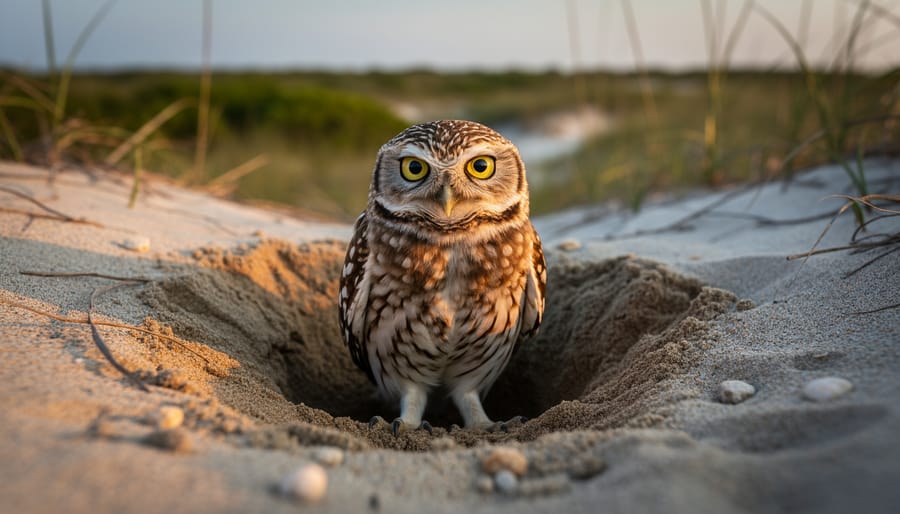

Floridians who share their land with burrowing owls can follow the Florida Fish and Wildlife Conservation Commission’s guidelines in a short afternoon: learn to spot a burrow, mark it, keep a protective buffer around it, schedule work outside nesting season, and call FWC before anything disturbs the site. No special training is needed, just sharp eyes and a little patience.
These small owls are unusual. They live and nest underground, and in Florida they stay put year-round, so a burrow that looks quiet in August may be home in February. Their burrows are protected, which means a dig, a mow, or a fence line in the wrong spot can do real harm.
The good news is that careful landowners and volunteers are making a difference. Here in Canada, the same quiet vigilance has helped bring Burrowing Owl conservation programs on the Prairies to life, powered by volunteers who count burrows and share what they find. The steps below show how to do your part. For current distances, dates, and permit details, always confirm with official FWC sources, since rules can change.
Why Florida’s Burrowing Owls Need Protection (and What It Means for Conservation Programs)
Who the Guidelines Are For
These guidelines are written for anyone whose work or property could affect a burrow. That includes private landowners, developers, golf course and school grounds managers, airport staff, and community volunteers. They explain how to avoid harming owls and flag when you need professional permitting or a call to FWC before you proceed.
If you’re new to this, it helps to see how burrowing owl conservation programs work in practice. The same thinking behind mammal habitat protection applies here, since owls often rely on burrows other animals dig.
What You Need Before You Start: Tools, Materials, and Information
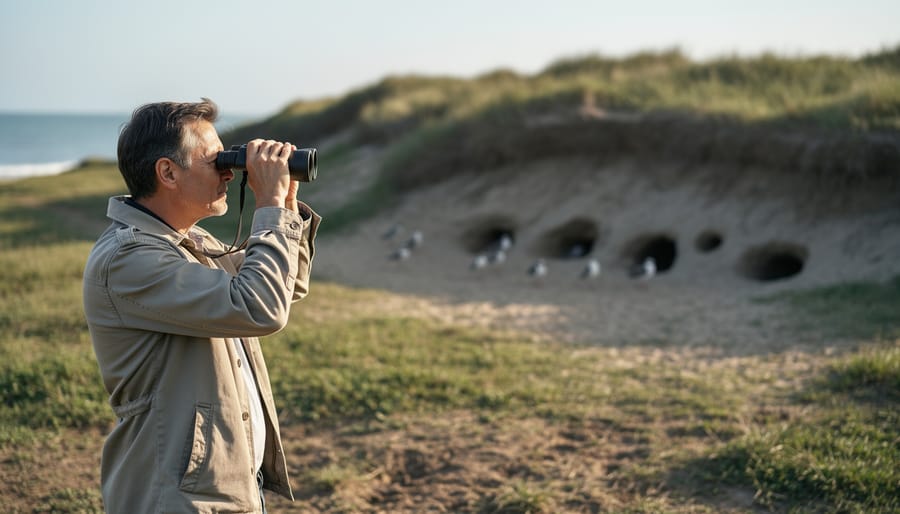
Before you head out to a site, gather a few simple things. The good news is that protecting burrowing owls starts with watching, not touching, so your kit stays light and low-impact.
- Binoculars, so you can watch burrow entrances without stepping close.
- A camera or phone for dated photos of the burrow area and any signs of activity.
- A site map or aerial image to mark where you spot mounds or owls.
- A notebook and pen for recording dates, times, and what the owls are doing.
- Sturdy, closed-toe footwear for uneven, sandy ground.
- Current FWC burrowing owl guidance and contact details, saved to your phone or printed.
Check FWC’s official pages just before your visit, since rules, buffer distances, and seasonal dates can be updated. Having the right phone number ready also means you can call quickly if you find an active burrow.
Just as important is what stays at home. The guidelines emphasize observing from a distance, so leave shovels, probes, traps, and any burrow-handling equipment behind. Nothing in your kit should ever touch, open, or alter a burrow.
Safety Warnings and Stop Conditions Before You Approach a Burrow
Before you walk any closer to a possible burrow, know when to stop. If you see a sandy mound with an open entrance, whitewash (the white droppings) streaked on the ground, feathers, pellets, or an owl standing at the burrow’s mouth, treat it as active and back away. The same goes for any sign of nesting, like adults carrying food or chicks peeking out. Call FWC before you do anything else, and call before any work that could collapse, cover, or block a burrow, including mowing, grading, or clearing nearby.
These birds and their homes are protected by law. Harming owls, eggs, or burrows is illegal, and handling or relocating owls requires authorization, as outlined in Florida burrowing owl protections. Never try to trap, move, or “rescue” a bird yourself, however well-meaning.
Your own safety matters too. Sandy, open habitat hides holes and dips, so watch your footing. Other animals use burrows as well, and a curious hand or boot could meet a snake, rodent, or insect nest, so keep your distance and never reach into an entrance. Fire ants and biting insects are common in sandy ground, and Florida heat adds up fast, so carry water, wear sturdy closed shoes, and take breaks in the shade.
Step-by-Step: Identifying and Protecting an Active Burrow
Recognizing an Active Burrow
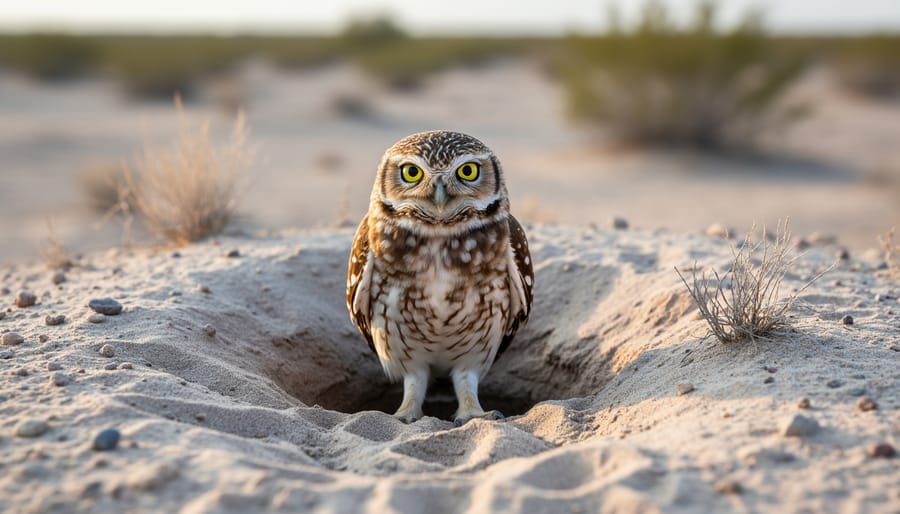
Active burrows give themselves away if you know where to look. Watch for a sandy mound at a hole’s entrance, and for whitewash, the chalky white streaks of droppings splashed on the ground or nearby rocks. Look too for pellets, small compact lumps of fur and bone that owls cough up after eating, along with scattered feathers. Often the clearest sign is the owl itself, standing like a tiny sentinel at the entrance.
If you think you’ve found one, work through it calmly:
- Stop moving and keep your distance from the opening.
- Watch through binoculars for owls, whitewash, or pellets.
- Photograph the site and jot down the date, time, and what you saw.
- Mark the spot on your site map.
- Report the sighting to FWC, then keep monitoring from afar.
Setting Buffers and Timing Your Work
A buffer is simply a protected zone around a burrow where people, vehicles, mowers and equipment stay out. Burrowing Owls nest on the ground, so a passing footstep or a roaring machine can flush adults, expose eggs and chicks, or collapse the tunnel itself. Distance gives the birds room to keep feeding and brooding as normal.
Timing matters just as much. Disturbance during the nesting season does the most harm, because parents may abandon a nest while young are entirely dependent on them. Scheduling mowing, clearing or construction outside that window is one of the easiest ways to protect a family of owls.
FWC sets the specific buffer distances and nesting dates, and they can change, so confirm both with FWC before any work begins.
Community Stories: Volunteers and Programs Making a Difference
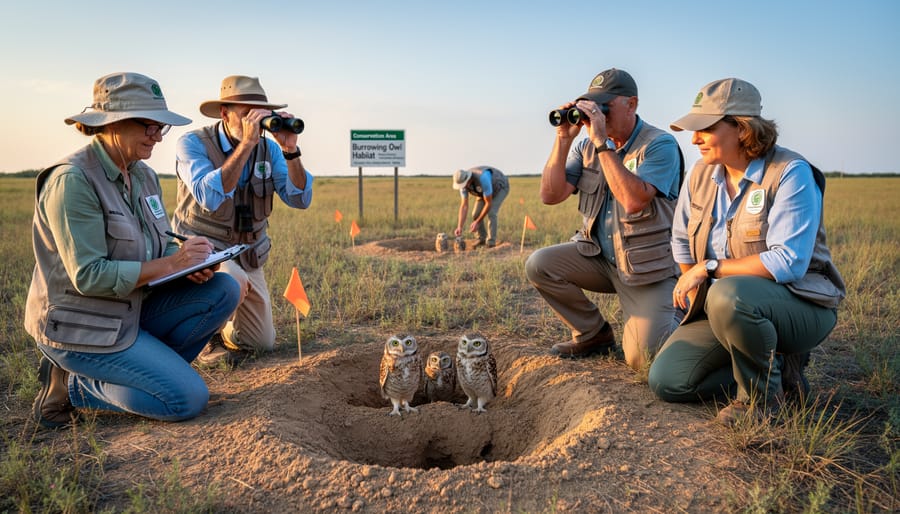
Across North America, Burrowing Owls are getting a second chance because ordinary people show up. In Florida, community volunteers help watch over nesting sites, and FWC’s own guidance encourages the public to report owl sightings so biologists can track where burrows are active. A volunteer’s job is often simple: sit quietly at a safe distance, note how many owls are present, and log what they’re doing. It’s patient, rewarding work, and it feeds directly into the guidelines this article covers.
Canada’s story is just as hopeful. Burrowing Owls once vanished from large parts of the prairies, and Canadian recovery groups have worked to bring them back through captive breeding and release, paired with habitat stewardship on working ranchland. Landowners agree to protect native grassland, and volunteers help install artificial burrows, which can mean digging out a nest chamber, setting a pipe tunnel, and tucking it into the prairie sod. If you want to see how this kind of work pays off, this wildlife preservation success shows what dedicated people can do for species on the edge.
Want to be part of it? Wild Canada Preservation welcomes volunteers and supporters who care about prairie wildlife. For Florida projects, contact FWC to learn about current monitoring programs, since opportunities change from season to season.
Verifying Your Work and Taking the Next Steps
Once the work is planned or underway, a quick verification pass tells you whether you’ve really protected the burrow. Walk the site again and confirm your buffer is still intact and clearly marked. Compare your notes and photos against what you see, because owl behaviour can shift as the season moves along. Then check your plan against the latest FWC burrowing owl guidance, since distances and dates can change.
- Re-check that the buffer is marked and undisturbed.
- Review your dated notes, photos, and map for accuracy.
- Confirm with FWC that your plan meets current guidelines.
- Report new owl or burrow sightings to FWC.
- Share the guidelines with neighbours and site staff.
Reporting matters more than it might seem. Every documented sighting helps biologists track where owls are hanging on. From there, consider joining a local monitoring program, where volunteers learn to observe owls without disturbing them. You can also support the conservation partners who keep recovery work going on both sides of the border. Small, steady actions add up.
Frequently Asked Questions About Burrowing Owl Guidelines
Are burrowing owls protected?
Yes. In Florida they are a state-listed species, and harming owls, eggs, or active burrows is not allowed. Confirm the current status and rules with FWC.
Can I mow near a burrow?
Mowing close to a burrow can disturb nesting owls or collapse tunnels, so check FWC’s current buffer and timing guidance first and call before you start.
Who do I call about an owl on my property?
Contact FWC directly. Share what you’ve observed and any photos, and they’ll tell you what steps and permits apply.
Are the rules the same in Canada?
No. Canadian prairie owls fall under federal and provincial protections, such as the Species at Risk Act, so check with Environment and Climate Change Canada or your provincial wildlife agency.
Artificial burrows are a separate question. Installing one without guidance can do more harm than good, so ask FWC whether a project is appropriate and what authorization you need. Volunteer monitoring groups often build and maintain these burrows under official direction, which makes them a good place to start.
Every owl that raises its young in an undisturbed burrow is a small win for conservation, whether it happens in a Florida pasture or on a Saskatchewan prairie. Following FWC’s guidelines is one way to make that win possible. Before you act, check FWC’s official resources for current rules. Then volunteer, share what you’ve learned, or support Wild Canada Preservation, and help these owls keep their homes.