
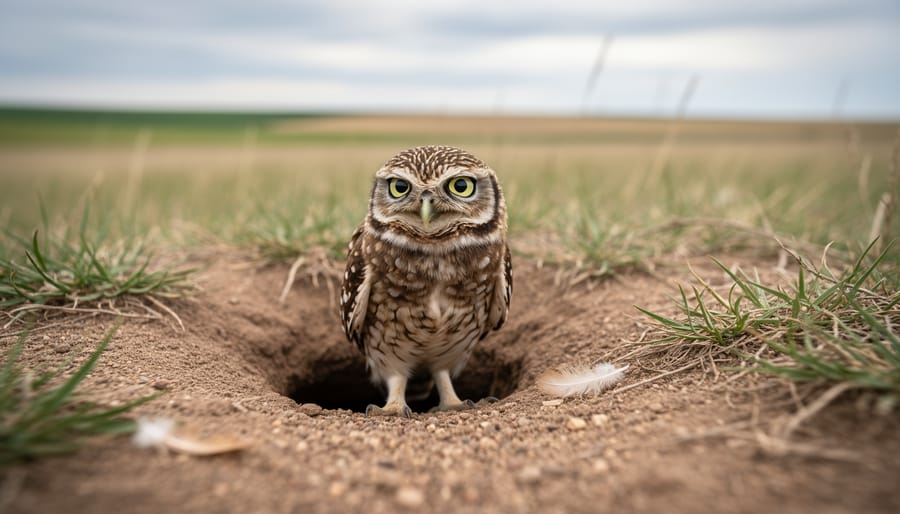

The burrowing owl faces a conservation crisis across Canada, with populations declining by more than 90% since the 1990s, but targeted protection programs are now reversing this trend through habitat restoration, artificial burrow installation, and community science partnerships.
These pint-sized raptors, standing barely 25 centimeters tall, once thrived across the Canadian prairies. Today, fewer than 1,000 pairs remain in their native range, primarily in southern Saskatchewan and Alberta. The steep decline stems from habitat loss as grasslands convert to cropland, pesticide use that reduces prey availability, and vehicle strikes along rural roads where the owls hunt at dusk.
What makes this story different from other wildlife emergencies is the measurable progress happening right now. Conservation organizations have documented breeding success rates climbing from 15% to nearly 40% in protected sites over the past five years. Artificial burrows give nesting pairs safe alternatives when natural burrows disappear. Predator guards installed around nest entrances have cut juvenile mortality rates significantly. Landowners who maintain prairie dog colonies, which create the underground burrows these owls depend on, receive financial incentives and technical support.
The burrowing owl’s recovery depends on scaling these proven interventions across its remaining range. Unlike species that require vast wilderness, these adaptable birds can thrive near human communities when given proper protection. Volunteers conduct nest monitoring, ranchers adjust mowing schedules to protect nesting sites, and citizen scientists track migration patterns. Each action builds toward a future where these charismatic ground-dwellers reclaim their place in Canada’s grassland ecosystem.
Why Burrowing Owls Are Critically Endangered in Canada
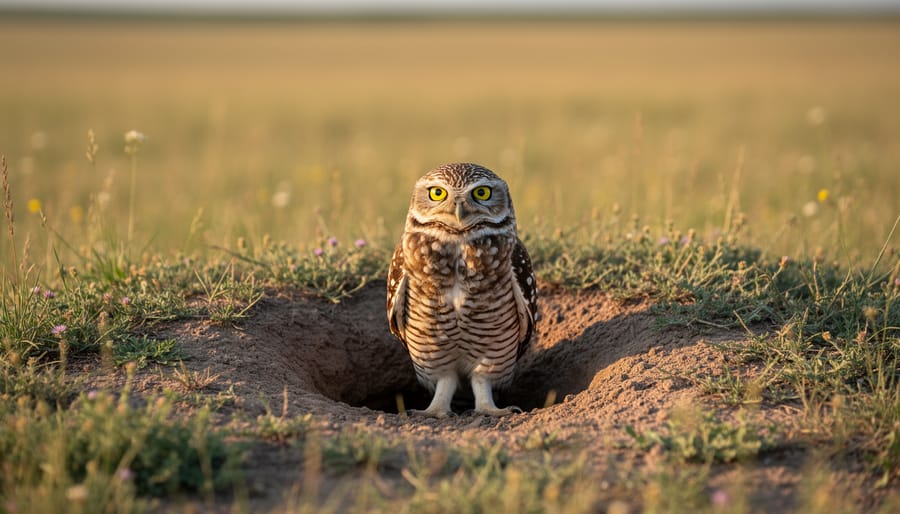
Canada’s burrowing owl population has crashed by more than 90% over the past four decades, pushing this small prairie dweller to the brink of extinction. The threats to burrowing owls are numerous and interconnected, creating a perfect storm that has decimated their numbers across Saskatchewan and Alberta, their last remaining strongholds in the country.
Habitat destruction ranks as the single biggest threat. As native prairie grasslands were converted to cropland throughout the 20th century, burrowing owls lost the open landscapes they depend on for nesting and hunting. These birds nest in underground burrows, typically abandoned by ground squirrels or badgers, but intensive farming eliminates both the burrows and the prey species that sustain owl populations. Today, less than 20% of Canada’s original prairie remains intact.
The widespread use of agricultural pesticides compounds the problem. Chemical pest control reduces the abundance of grasshoppers, beetles, and small rodents that form the burrowing owl’s primary diet. Similar pesticide impacts have devastated other prairie species, creating cascading effects throughout the ecosystem. When owls do find prey in treated areas, they may ingest toxins that accumulate in their systems or affect their reproductive success.
Predation pressure has intensified as habitat fragmentation forces owls into smaller, more vulnerable populations. Coyotes, foxes, and domestic cats take a heavy toll on both adults and nestlings, particularly where human development brings predators into closer contact with nesting sites.
Climate change adds another layer of difficulty. Shifting weather patterns alter the timing of insect emergence, potentially creating mismatches between when owl chicks need food and when prey is most abundant. Drought conditions reduce both vegetation cover and prey populations, while extreme weather events can destroy nests or kill young birds.
According to population estimates since 2004, the decline has continued despite early conservation efforts, with some years seeing fewer than 400 individuals counted during breeding season surveys. Without aggressive intervention, Canada could lose this species entirely within the next two decades.
How Burrowing Owl Conservation Programs Work
Habitat Protection and Restoration
Protecting what’s left of Canada’s prairie grasslands forms the backbone of burrowing owl conservation. In southern Alberta and Saskatchewan, programs focus on securing and restoring native grassland that provides the short vegetation structure these owls need for hunting and nesting. Conservation easements with ranchers keep critical parcels from being plowed under or developed, while controlled grazing maintains the low grass height that suits burrowing owls and their ground squirrel hosts.
When natural burrows are scarce, conservationists install artificial nest burrows using buried plastic pipes or wooden boxes that mimic badger dens. Alberta’s Operation Burrowing Owl program has placed hundreds of these structures on participating farms, giving breeding pairs safe refuge where ground squirrel colonies have disappeared. The artificial burrows reduce predation risk and provide stable nesting sites that outlast natural dens.
Landowner partnerships are essential. Saskatchewan’s stewardship program compensates producers who delay haying around active nests, preventing the destruction of eggs and young owlets during peak breeding season. These agreements work because they respect working landscapes, conservation happens alongside cattle ranching and farming, not despite it. This collaborative approach mirrors broader mammal habitat protection efforts across Canada, recognizing that species survival depends on maintaining functional ecosystems where people earn their livelihoods.
Captive Breeding and Release Programs
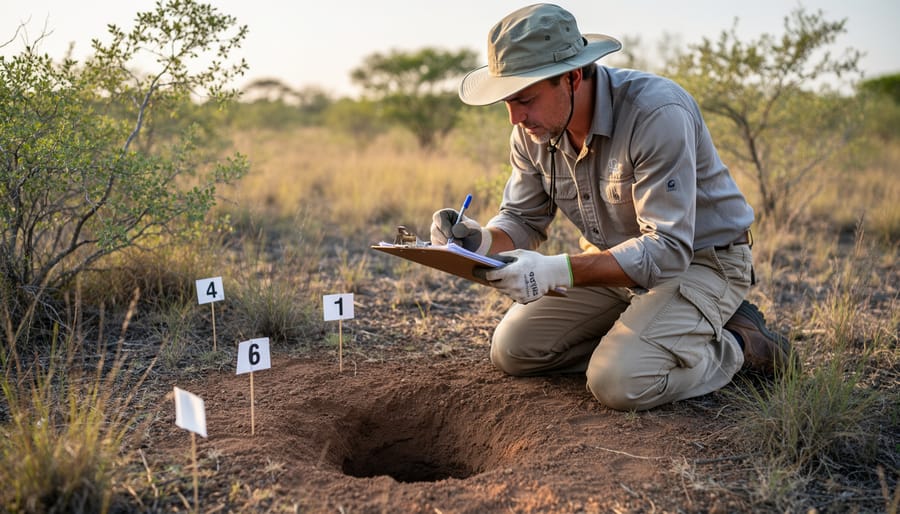
Captive breeding programs represent one of the most intensive conservation strategies for bringing species back from the edge of extinction. The Calgary Zoo’s Burrowing Owl Conservation Program, established in 1992, has become Canada’s flagship effort. Each spring, breeding pairs produce clutches of eggs in carefully controlled environments that mimic natural prairie conditions. Chicks are hand-reared to maximize survival, then undergo a critical pre-release phase where they learn hunting skills and develop wariness of predators.
Release typically happens in July at protected sites across Alberta and Saskatchewan. Young owls wear tiny radio transmitters so researchers can track their survival and movements. The numbers tell a sobering story: only about 20-30% of released owls survive their first year in the wild, compared to roughly 50% survival for wild-hatched chicks. The gap reflects the profound challenge of teaching captive birds the instincts that wild parents pass down naturally. Despite this hurdle, the program has released over 1,000 owls since its inception, contributing vital genetic diversity to remnant populations that might otherwise have vanished entirely.
Community Engagement and Landowner Partnerships
The most effective burrowing owl conservation happens when private landowners become active partners. Since roughly 80% of remaining prairie habitat sits on privately owned ranch and farmland, programs work directly with agricultural communities to protect nesting sites. Stewardship agreements compensate landowners who delay haying or grazing near active burrows during breeding season, typically from April through August. These voluntary arrangements respect farming operations while giving owlets time to fledge safely.
Educational workshops organized by wildlife preservation groups help ranchers identify burrows and understand the owls’ ecological benefits, like controlling Richardson’s ground squirrel populations that damage crops. In Saskatchewan, the “Operation Burrowing Owl” program has enrolled over 900 landowners protecting more than 650 sites. Many participants install identification markers on fence posts to alert farm workers about nearby nests. This grassroots approach builds lasting local support, transforming potential conflicts into conservation victories rooted in community pride and shared stewardship of prairie ecosystems.
Success Stories: Signs of Hope for Burrowing Owls
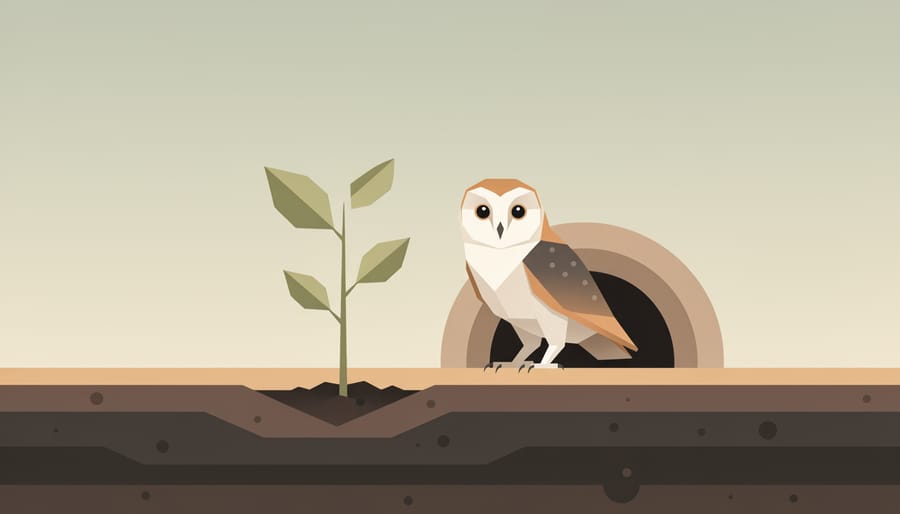
After years of intensive effort, conservation programs are finally seeing tangible results that offer genuine hope for burrowing owl recovery across Canada.
In southern Alberta, dedicated monitoring has revealed encouraging signs of population stabilization in areas where stewardship programs are most active. The region around Hanna, once seeing precipitous declines, now hosts breeding pairs that return year after year to protected sites. Landowners who’ve partnered with conservation groups report watching young owls successfully fledge from artificial burrows installed on their properties, a sight many feared they’d never see again.
The captive breeding and release programs have produced particularly heartening outcomes. The Calgary Zoo’s breeding initiative has released over 1,000 owls into the wild since its inception, with documented cases of released birds establishing territories and successfully raising their own young. Researchers tracked one female, originally hatched in captivity, who returned to her release site three consecutive years and fledged a total of eleven owlets, proof that captive-bred owls can thrive and reproduce in the wild.
Volunteer monitors have witnessed recovery milestones firsthand. Sarah Chen, who’s surveyed owl populations in Saskatchewan for eight years, recalls the moment she discovered a breeding pair at a site where owls hadn’t nested in over a decade. “Seeing those four fuzzy heads poking out of the burrow entrance brought tears to my eyes,” she says. “It confirmed that when we protect the habitat and give them a chance, they’ll come back.”
Some regions now report small but measurable increases in breeding pairs compared to five years ago. While overall populations remain critically low, these localized successes demonstrate that conservation interventions work. Each successful nest, each returning owl, represents not just a number but a testament to what coordinated conservation effort can achieve when communities, scientists, and landowners unite around a common goal.
How You Can Help Save Burrowing Owls
Every person who cares about burrowing owls can make a tangible difference in their survival. Conservation isn’t just for scientists and wildlife managers, it depends on everyday Canadians stepping up in ways both big and small.
Here’s how you can contribute to burrowing owl recovery, ranked by the immediacy and scope of impact:
- Report burrowing owl sightings immediately through eBird or provincial wildlife reporting systems, your observations help researchers track population movements and breeding success in real time.
- Volunteer with monitoring programs during breeding season (April through August) to help survey nests, band juveniles, or maintain artificial burrows in Alberta and Saskatchewan.
- Donate to conservation organizations like the Burrowing Owl Interpretive Centre or the Alberta Conservation Association, which fund habitat restoration, captive breeding facilities, and landowner stewardship programs.
- Adopt a symbolic burrowing owl through organizations like the Calgary Zoo, these programs directly support captive breeding efforts and educational outreach.
- Advocate for prairie grassland protection by contacting provincial representatives about land-use policies, supporting conservation easements, and opposing development projects that fragment remaining habitat.
If you own or manage land in burrowing owl territory, consider enrolling in a stewardship program. Organizations will work with you at no cost to identify potential nesting sites, install artificial burrows if appropriate, and provide guidance on owl-friendly land management practices like delayed haying and reduced pesticide use.
For those wanting hands-on involvement, Operation Burrowing Owl in Saskatchewan and similar programs across the prairies welcome volunteers for nest monitoring shifts, educational events, and habitat work parties. No prior experience is necessary, just enthusiasm and a willingness to spend time in the grasslands these remarkable birds call home. The time commitment can be as little as a few hours or as extensive as a full summer season, depending on what fits your schedule.
Common Questions About Burrowing Owl Conservation
Where can I see burrowing owls in Canada?
Burrowing owls are primarily found in the grasslands of southern Alberta and Saskatchewan during breeding season, typically from April through September. Your best chance of spotting them is in protected prairie areas and ranch lands where active conservation sites exist, though sightings have become increasingly rare.
How many burrowing owls are left in Canada?
Current estimates suggest fewer than 1,000 pairs remain in Canada, representing a dramatic decline from historical populations. The exact number fluctuates yearly based on breeding success and survival rates, which conservation programs actively monitor.
Do burrowing owl conservation programs actually work?
Yes, conservation efforts have prevented complete extirpation from Canada and stabilized populations in certain protected areas. While recovery remains slow, captive breeding programs have successfully reintroduced owls that have gone on to establish breeding pairs in the wild.
Why don’t burrowing owls dig their own burrows?
Unlike many owls that nest in trees, burrowing owls evolved to use burrows excavated by other animals like ground squirrels and badgers. Their legs and feet aren’t adapted for extensive digging, so they rely on existing underground structures for nesting and shelter from predators and extreme weather.
These questions reflect what most people want to know when they first learn about burrowing owl conservation. Understanding the basics, where these birds live, how threatened they truly are, and why their biology makes them vulnerable, helps explain why conservation programs take the approaches they do. The success of these efforts depends partly on public awareness, which is why answering common questions matters for building broader support.
The future of Canada’s burrowing owls hangs in the balance, but it rests in capable hands, ours. Every nest box installed, every acre of prairie protected, and every donation made chips away at the forces pushing these remarkable birds toward extinction. Conservation programs have proven that recovery is possible when communities rally together with science-backed strategies and unwavering commitment.
We’ve seen what dedication can accomplish: stabilizing populations in critical areas, successful releases of captive-bred owls, and landowners transforming their properties into havens for wildlife. These victories didn’t happen by chance. They resulted from researchers braving harsh conditions to monitor nests, volunteers spending weekends building burrows, and everyday Canadians choosing to stand up for a species that cannot speak for itself.
The clock is ticking, but hope remains very much alive. Wild Canada Preservation continues working alongside dedicated partners to expand these lifesaving efforts across prairie ecosystems. Whether you contribute time, resources, or simply spread awareness, you become part of a movement that refuses to let these owls disappear silently into history. The burrowing owls need us now more than ever, and together, we can ensure their haunting calls echo across Canadian grasslands for generations to come.